

We often don’t have a choice when it comes to being wrapped in the barbed wire of suffering and despair. There is a good reason why 1 in 4 Americans have some form of mental illness, according to the National Alliance of Mental Illness. It’s in our nature to become our own bitter enemies, far worse than any external forces. What we might be getting wrong in our society is this notion that if you’re not going to be depressed or anxious, then you should be sitting pretty on the other side of the scale – happy.
I hate the word happy.
It’s one of the worst dead adjectives in the English language.
I don’t let my students get away with describing something or someone as happy in their writing. Now, before you brand me a misanthropic, pretentious C U Next Tuesday, let me explain.
Happy is as relative as humor or food tastes. I’ve seen people go ape shit over exploring old cemeteries. I know. I’ve been one of them. Seasonal depression can be just as prominent in the spring and summer as it is in the winter months. A lot of people thrive on shorter days, oversized hoodies, and cold morning air freeze-drying a wet head. I am one of them.
Furthermore, someone in touch with their angels and demons will acknowledge the fact that the darkest hours in life shape us into exactly who we want to be, not who we think we should be.
Here is a list of women writers and poets who achieved unconquerable literary feats yet took their own lives.
Ann Sexton
Charlotte Perkins Gilman
Virginia Woolf
Elise Cohen
Dorothy Parker
and my spirit animal, Sylvia Plath
Now, before I go any further, let me make it clear that I do not condone suicide. But I strongly believe in person’s choice to live or die on their own terms. If that makes any sense. Terminally ill patients often face a suffering far worse than death. If you have nothing left to lose, and no control over what will ultimately consume your body, then you absolutely should be able to take your own life. I do not believe anyone with a mental illness dies by suicide. The illness is what kills the person. All of these incredible women, as well as brilliant men such as Robin Williams and Anthony Bordain died from depression, not suicide. Help, proper treatment, and acceptance over shame far supercede a permanent “solution” to a treatable mental illness. I have forgotten to remind myself of this several times.
Nevertheless, these ladies’ suicides shouldn’t define who they were overall, but in a way, their deaths defined their art. None of these women would have been able to create the work they did without their inner torture. For that, ladies and gentlemen, we have to equally give thanks to the angels and demons on their shoulders and perhaps be a little grateful for our own.
“As for me, I am a watercolor. I wash off.” – Ann Sexton.
You can be a not so enthusiastic observer of art but still love watercolors. When spread out on paper, they give us a fair representation of the human condition – running unpredictably, blending and changing constantly, and weathering the storm. Watercolors can make quite a mess and they are not easy to use when painting a concrete image. Nevertheless, they are indescribably beautiful no matter how screwed up the composition may be. Yes Ms. Sexton, we all create chaos and wash off, but we are all our own masterpieces.
“I desire the things that will destroy me in the end.” –Sylvia Plath.
Perhaps I am a little bias since this woman is my girl crush, who I’ll always refer to in the present tense, but Sylvia hits the bullseye with a thumb tack on this one. Our wants and our needs often come together for one big circle jerk. All too often, we spend a lot of time prioritizing the needs and/or completely brushing aside our wants. Going through a cycle of wants over needs and needs over wants makes life a lot harder but a hell of a lot more interesting. Perhaps our self-destruction is an art, but an Impressionist painting – hypnotic from afar and utter chaos when magnified. Maybe Dorothy Parker was on to something…
“Take care of the luxuries and the necessities will take care of themselves.”
Bottom line, curbing the demons in favor of the angels would not have likely saved these incredible women, and bringing the devil to his knees may not have given us their phenomenal gifts.
As an educator, I’ve sadly not had many opportunities to teach the power of writing poetry. But at the end of the day, it’s not really something that can be taught. It’s already there. In your bones, right down to the teeth and fingernails. For most, it just takes a lot of cattle prodding to start mooing that beautiful music. And poetry is, in fact, music without the notes.
I learned this when, as a teacher, I organized and directed a Spoken Word performance with a large group of teenage students with various disabilities, namely Autism Spectrum Disorder, ADHD, Speech and Language Disabilities, and physical disabilities. For anyone who may not know, Spoken Word is basically performance poetry, recited usually from memory and with intense inflection and emotion.
I’ve never performed Spoken Word, nor had I ever intended to. I can barely get up and read my poetry in a hole-in-the-wall hipster cafe where everyone is stoned. So the prospect of running a Spoken Word with my students was, to say the least, daunting. But there was one driving force that kept me pushing the envelope – my students’ undying enthusiasm for writing and speaking despite the hands they’ve been delt. As a special education student myself, the thought of participating in performance poetry would have been equal to preparing for a colonoscopy. I admired every second of their boldness, their love for the written word, and their ability to use their voices. They knew that in this judgemental world, not many would listen, but they still spoke. I hope poetry will continue its upswing and keep fanning the flames.
Sure, a lot of the material my students wrote for Spoken Word fell into the category of angsty, teenage melodrama. However, a great deal of the writing brimmed with philosophical wisdom well beyond their years and their supposed disabilities.
Student 1 – “…If I could go back
and find you right away,
our loving duet,
I’d move faster for you…”
Okay, so that one is a pretty much adolescent emo, but well done for a child nonetheless. Now take in the next two pieces generated from old book pages I handed them while they were sprawled out on the stage during preparations and rehearsals.
Student 2 – The works are in themselves
found curiosity poetry.
Drama, poetical and sentimental romance
in every country,
in every language.
Immortal halos around
men and women
divided into classes.
Student 3 – Her face is pleasing
her body is soft
her skin is fine, tender, and fair.
Her eyes are bright and beautiful.
She is lovely.
Her love is perfumed like the lily
that has newly burst.
She is respectful and religious.
She is the gods.
This process is called blackout poetry. I call this the poetry method for anyone who’s convinced they are poetically challenged. You take an old book page, either real or photocopied depending on your stance on dismantling old books, and you circle the best words and phrases that can come together to make a sensical or ambiguous poem. Then you break out a black Sharpie and draw lines through all the words you don’t want seen. This can be done simply with black ink or if you’re feeling bold, you can sketch, paint, or collage the spaces you want blanked out. Here are some of mine.
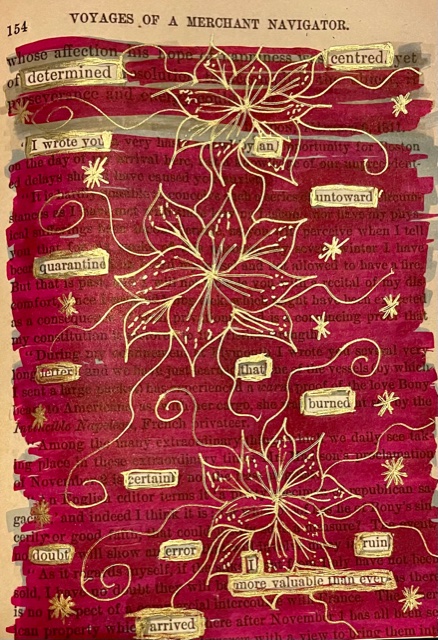
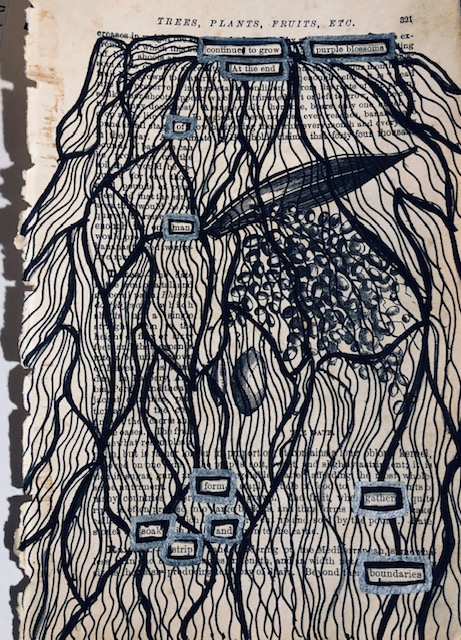
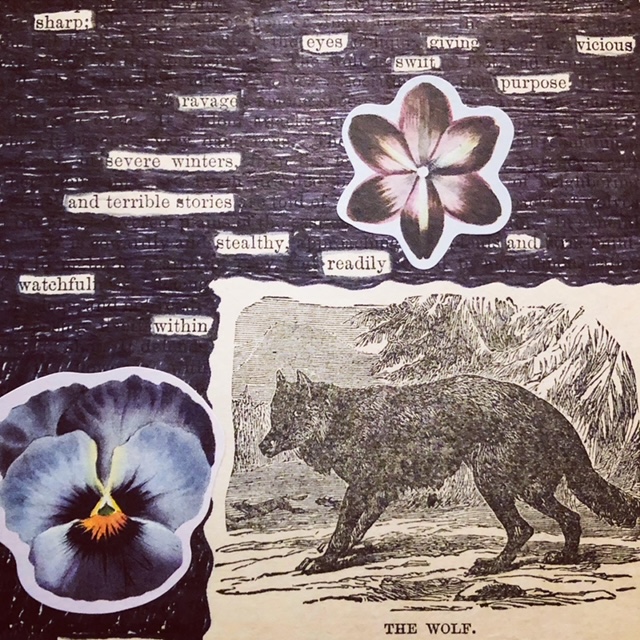
Blackout poems can be a versatile, cathartic, and freeing process, but it can also be challenging, especially for children who have enough of a hard time putting their thoughts on paper. But these guys embraced every second of this scribbling madness and knocked it out of the park. I didn’t think I could get a bunch of special education students to use unconventional ways to create poetry, but I still fall into the trap of questioning my kids’ abilities. Every time I do, I’m the one that comes out looking like the dumbass. As a special education student myself, growing up in cesspools filled with people who doubted my abilities, which then kept my self-image in the shitter, I can understand where my own strained confidence comes from.
For weeks, I rehearsed my kids to death – pushing as much eye contact with the audience as possible, reminding them to stand straight and tall and face the audience. I repeated the word “enunciate” excessively, and I threw little tantrums like my old drama teacher from high school, Mr. L – the only teacher who could make me feel like I was ready to stand up in the world and be seen, heard, and remembered. I can’t say I was looking to match that kind of leadership. You either have it or you don’t. As a teacher or parent, you can always make an impact, but there’s a vast difference between educators and teachers. Educators instill knowledge and skill sets. A teacher’s job is to lay the bricks needed for students to value what they’ll experience as well as prepare them for the wrecking balls they have to dodge as they build. And perhaps…just perhaps, we also have to encourage our youth to experience and accept failure and approach it with an open mind.
The day of the performance was phenomenal. Aside from one student who was overcome with crippling anxiety and had to leave the stage, every kid moved and felt their words and did their damndest to make sure the audience felt those punches. Not many powerful and joyous moments bring me to tears. I can’t say I’ve had enough of them to truly know the difference between my cool tears and my hot ones. But I ended the show, as the host, barely able to verbalize the unbridled pride I felt for my brilliant but underestimated wordsmiths. Based on their words, they know there is good in the world that will embrace their abilities and disregard their disabilities. But they also know as well as I do, this world dissolves what doesn’t fit into a typical mold. This duality is not easy for our kids to remember because all we seem to do is teach our kids how to avoid their external and internal demons. In general, we dwell too much on how to be happy, and we don’t focus enough on how to be productively despondent.
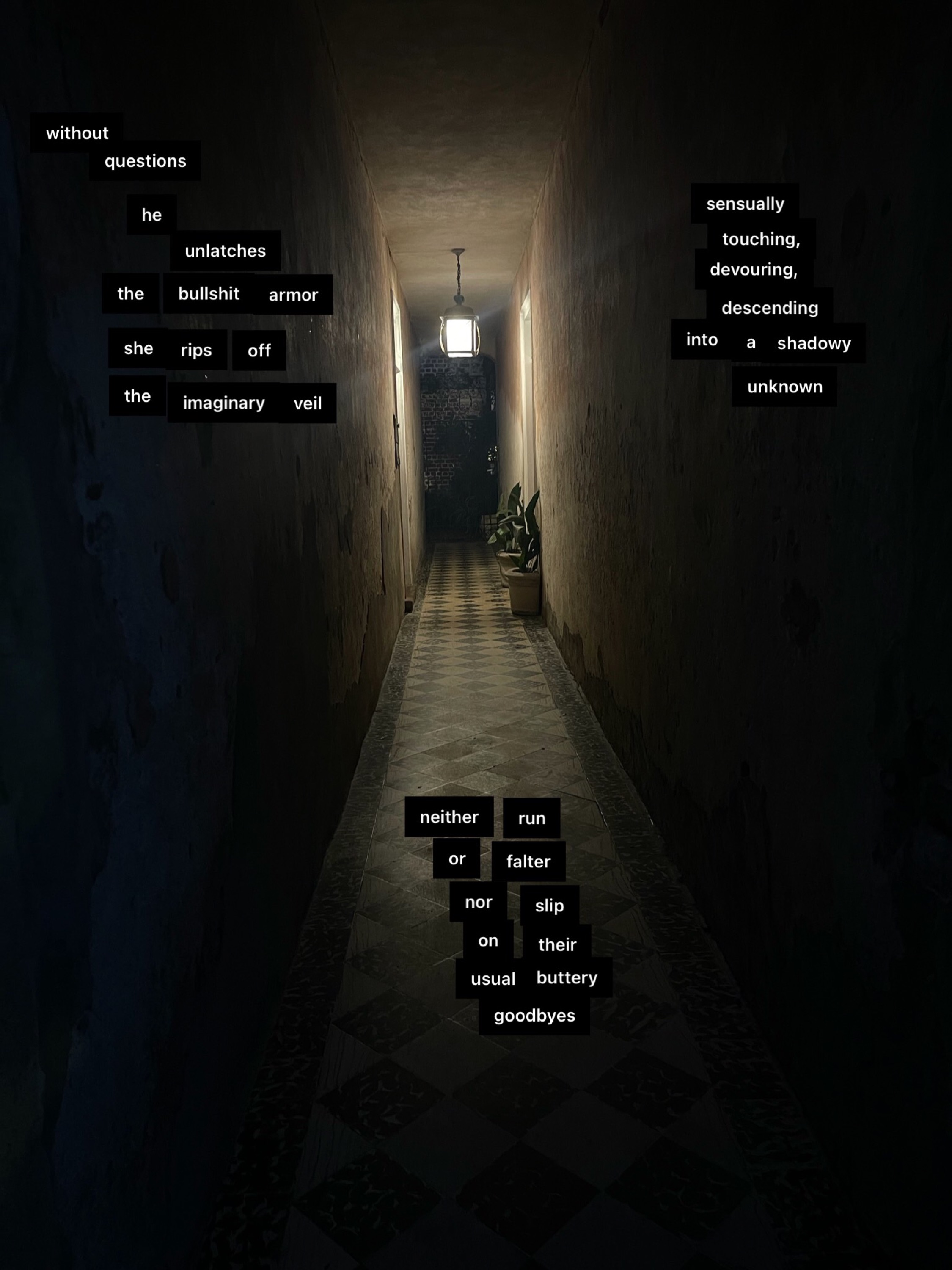 Check out my poem “meeting again in the shadows” made with Instant Poetry 2


 Serotonin with a side of fries, please