I Drank from the Garden Hose – nostalgic poem and story dump. Find more at idrankfromthegardenhose.com

Kiosk 

I could have drowned in your CK One melancholy 

and your cheap sunglasses nobody would buy at $30 a pop. 

Each time you glided into my store 

you asked me to watch your kiosk while you ran to the bathroom. 

I wondered if you’d stop at Mrs. Field’s cookies 

for yourself or that chick you met while wondering aimlessly 

through Contempo Casuals. 

Would she appreciate that cookie the way I would 

and hold it as if it were the body of Christ? 

Would she bring you a food court smoothie in return 

and say, “Drink this in remembrance of me?” 

Would she hide the disdain for the gel in your hair 

the way I would? 

I could have been more than the girl 

who worked in the pet shop across the way. 

All those nights I closed the place alone at only 16, 

I could have been the one who got your favorite pizza toppings, 

all the ones I hated, knowing I could pick them off 

and drop them into your mouth like seedless grapes

from a Playmate cooler on the beach. 

I could have been your Some Kind of Wonderful, 

to your Eric Stoltz, only I would have biked 

down that quiet street to make you run faster. 

I could have been some other girl you’d forget 

until it was time for you to watch someone die

or convince someone to move on, whichever came first. 

My first job was in Eatontown, New Jersey’s Monmouth Mall, as was every other teenager in town. I worked at one of those pet novelty gift shops for people who marry their dogs and cats (no judgment). I’d often open the place up in the summer and regularly close it up by myself at night, which I’m sure was illegal, but hey, it was the 90’s. A lot of scary shit wasn’t happening yet. At least we never knew about it. 

I loved working at a store in my Mecca otherwise known as my mall. I needed that opportunity because I wanted to avoid working at Burger King like the bubonic plague. Being elbows deep in burger grease and mop sink water never sat right with me, and I probably sound like the whitest, most entitled priss on the planet for thinking that way. (I did work in a couple of deli’s later in high school so at least give me some credit). Nobody knew that my biggest fear about working at Burger King was 1.) I would have to wait on classmates I despised, and 2.) I would have to count a lot of money and quickly, and I knew I would freeze up like a Push Pop, stick in the ass and all. I have what is now known as Dyscalculia. I don’t like numbers, they hate me, and I shamelessly add and subtract with my fingers – sometimes my toes if I’m wearing flip flops. 

Working in a little gift shop in the mall was perfect because most sales were credit card transactions, and it was never busy enough for me to fumble making change. With that being said, the only thing that would make me want to be a teenager in the 21st century is that we don’t even need cash for vending machines anymore. 

As a teen, I also had a thing for men much older than me. Working in the mall offered more of an opportunity to be around older guys. Guys I would never talk to anyway unless a friend was willing to embarrass me. Every night when I worked in that pet lover’s crack dispensary, I saw this guy who worked in the kiosk in front of my store. He unknowingly channeled John Cusack, but he had Keanu Reeves’ hair in the movie Parenthood. He had to have been well into his twenties at the time, and I knew I had a better chance of figuring out how to record a show on a VCR while watching something else. 

Still, I wondered what it would be like to have coffee with him in a diner at 2 am, if I was allowed to stay out that late. I was used to being freakishly taller than a lot of guys my age, but this guy’s feet must have hung off the foot of his bed. I wanted to know if his lips tasted like Mountain Dew and Parliaments. There was no way he didn’t have a girlfriend, and she must have looked like Justine Bateman when she was on Family Ties. I hope after he finished selling sunglasses at the mall, he got a job in computers and maybe started a garage band that meets up for a bar gig once a year. 

Regardless, Monmouth Mall today is on the verge of economic collapse, and there are many, who once called it home, trying to fight for it. Often the social media response is, “It’s just a mall.” But when the mall is where you had your best and worst bonding moments with your mother, if it’s where you went last minute shopping with your Dad on Christmas Eve, if it’s where you first got a job, first fell in love, got into and stayed out of trouble at the same time? Then the downfall of the mall era can feel like the Earth crashing into the sun. 

All the Pretty Things 

I have become the Lisa Frank rainbow 

I will not escape. 

These limbs, these lips, this mind 

have been rebuilt using what’s left 

of the papers, pencils, and shiny stickers

of too many yesterdays. 

If you look closely, you can see the old games of M.A.S.H 

in my eyes. Study my hands close enough, 

you might still smell the Scratch & Sniffs I tried to salvage 

from notebook covers, spelling tests, 

and my heirloom jewelry box. 

I may have a pink zebra print pencil or two in a box somewhere, 

and one day I’ll use them to write my next unfinished book, 

the one about a much smaller, inkless world, 

or the one about the letters that write, fold, and send 

themselves to the ones we forgot to love. 

When I was young, I wasn’t the notebook, journal, pen, and pencil whore I am now. One huge binder, not a Trapper Keeper because Mom thought they wouldn’t be big enough, a few Bics, some folders, and a pencil pouch with the New Kids’ faces on them and I was good to go. My mother was into the simple practicality of school supplies. Mead, Ticonderoga, and black and white composition books filled our cart at K-Mart every late August. When I wanted the really girly stuff, like the colorful, sparkly, unicorn goodness of Lisa Frank products, I had to get grandma to take me to Jamesway. 

Jamesway was similar to a K-Mart, Caldor, Ames, or Woolworth’s, and I believe it even had a luncheonette at one point. Maybe not, but I miss the whole concept of lunch counters in department stores. My parents met in one, so let’s just say if it wasn’t for the K-Mart snack bar that once existed in Dover, New Jersey, I wouldn’t be here writing this hodgepodge of nostalgia. 

During my two week summer vacation visits with my grandparents, we frequented all the discount stores. When it came to school supplies, I made out like a bandit, and most of it ended up lost in the abyss that was my classroom desk cubby. 

Jamesway was also the go-to:  

  • for oversized neon T-shirts with plastic clips and spandex shorts to match.  
  • for the Get in Shape, Girl! fitness sets that told 10 year old girls they should look like Olivia Newton John
  • the Skip It or the Pogo Ball that meant certain death to a klutzy kid prone to skinned knees and head contusions
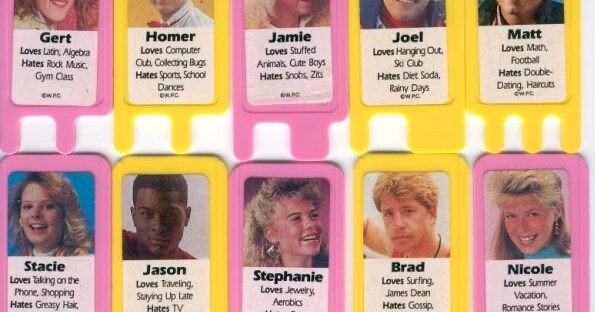
  • or for preteen games like Girl Talk Dateline, Mall Madness, and Heartthrob. In reality, didn’t we all end up with the dorky Homers as opposed to the surfers or the hot ski instructors named Joel or Trent? And would we want it any other way? Those games, as fun as they were, sparked our delusions quite early. 

When my grandmother died in 2011, I wrote a poem to put into her casket – a thank you of sorts that no one else could read, and I have no recollection as to what it said. Hopefully it mentioned all the New Kids stuff she’d win for me at carnivals and all the stickers she would buy me at whatever store we roamed – when all the other kids were hitting rocks on Slip n’ Slides and drinking from the hose.  

Hometown

I bet you never messed up an old lady’s sweater at Burger King

by pounding on a ketchup packet until it burst. 

Did you have an arcade in town 

where teenagers had sex on the pool tables? 

I’m sure there wasn’t an old cemetery with shattered stones 

behind your 7-Eleven, or did your town have a dark roller rink 

hundreds of kids could have named Dad every other weekend?

Did you get to touch a piece of the Berlin Wall when it visited your mall? 

I bet you never had a real Orange Julius. 

Or a pizzeria run by real Italians, when the placemats 

had maps of Italy on them instead of ads for dentists and lawyers. 

I’m sure you didn’t bump into copious amounts of Ben Cooper masks

on Halloween night, nor did you have a homemade ice cream shop

that stayed open in snowstorms. 

I wonder if you ever rode in your Dad’s Buick 

during one of those storms because he wanted 

a big cup of vanilla soft serve. 

Cars aren’t built like tanks anymore. 

Maybe towns are made the same way either. 

Yes, when I was 6 or 7, my extremely underdeveloped mind decided to smash some ketchup packets, one of which broke open and made an abstract painting on some lady’s delicately knitted sweater. Mom was mortified and we apologized profusely, but the lady was so gracious and brushed it off. Thank God it was the 80’s. 

The long forgotten cemetery in a small copse of woods was actually behind a Quick Chek, but I figured more readers could relate to 7-Eleven. A rumor spread for years about a man who hung himself in that cemetery. The noose snapped but the rope stay hung on the tree. When my friends and I would cut through those woods to get to the store, we’d spend several shaded minutes under those trees, trying to catch a glimpse of that rope. Cryptic as hell, I know, and I’m not sure if the story was true. Frankly, it’s nobody’s right to know. There was a time when we didn’t think we had a right to know everything. I just hope that no matter the outcome, that man found his peace, and if that rope did exist in those woods, I am happy no one ever found it. 

Shortly after the Berlin Wall fell, a tall slab of if came to town and stood markedly inside the mall, right near the entrance to Caldor. Small pieces of the concrete were sold in little plastic display cases, and my Dad quickly brought home a piece of history. Now, did a genuine piece of the Berlin Wall stand in front of the entrance to Caldor in Eatontown, NJ? Was a relic from one of the most significant events in contemporary history hanging out in front of a discount store where the working class went to buy cubic zirconia and Fruit of a Loom? I’ll leave that for you to decide. I’m not breaking my old man’s heart since he still has that little rock sitting in a curio to this day. 

But this poem makes one thing for certain. Kids today are not getting the hometowns we grew up with. The arcades, the Caldors, the sweaty Ben Cooper masks, the local legends and myths, and the shortcuts through the woods to buy sodas and candy – all that seems to have dissipated and replaced with Candy Crush, No Trespassing signs, extinct department retailers that turn into seasonal Halloween stores, expensive escape rooms, and steel water bottles that sound like bombs being dropped when they fall to the floor.

Prompt

What seemingly miniscule details from your hometown stand out to you the most? If you still live in your hometown, this should be a piece of cake. If you don’t, think about what landmarks are no longer standing, what annual events no longer happen, or what rumors, myths, or legends still hold on for the older generations? 

They’re Watching 

The old Little People toys 

sitting on the library shelf, 

with their weary faces and colors, 

watch me as if staring at a couple 

who hate each other, fight 

in the middle of a Walmart. 

They see my new cars, 

the disorganized rooms, 

the second notices, 

the grocery haul for the kids 

who will never exist. 

I question if they facepalm

themselves when I’m not looking. 

Then I remember, thank God 

they weren’t made with hands back then. 

So I ignore the unfolded laundry piles 

while eating Fruit Roll-Ups 

and Dixie Cup ice creams with wooden spoons. 

I look out the window 

at all the street racing Hyundais passing by,

doing 40 in a 25, and remind those little 

fading faces on the shelf  that they’ve got it good 

right where they’re at. 

The old Little People actually belong to my packrat husband who I love so much more than Dixie Cups. But those toys reside on one of my bookshelves in our home, so they are also mine by default. I used to pester him all the time about not letting shit go – when in doubt, throw it out – or at least donate the stuff to kids who are going to question why the little dog doesn’t have legs or why Big Bird and Cookie Monster don’t have arms or mouths. When you’re a 40-something year old teacher in the 2020s, you find yourself explaining a lot of things that are beyond the kids’ comprehension. If you ever find yourself trying to describe a Sit and Spin, or Qbert, or Gobots to a kid today, remember to choose laughter over tears. 

But I get it now. It’s important to hold on to pieces of your youth that helped shape who you are now. The smell, the look, or the feel of something long forgotten but then suddenly dug out from a cardboard box can provide a recharge you didn’t think you needed. 

New Kids 

That one used to be the bad boy 

you knew your father would hate.

That one kind of reminded your Mom 

of a young Franki Vallie. 

That’s the guy who can bench press a Buick,

but that guy would likely give you a puppy for your birthday. 

That one could be in a biopic about the Rat Pack, 

and that guy has a thing for wind and open button-downs. 

He has eyes like water lily leaves in an autumn marsh.

Yet this guy would be the one who’d never take his time, 

but once he has you, he’ll take all the time in the world. 

That’s the guy whose name you knew you’d see alone 

on a marquee covered in lights. 

Everyone knew he’d be the one who would cancel a date 

to take care of his mom. 

This one has the voice heard only by God 

and the girls who married him in front of their VCR’s.

That guy doesn’t wear helmets, makes his own rhymes, 

and tells the critics where to go because opinions 

are like the appendix, everyone has one at some point, 

but its as useless as an ex-lover. 

That’s the guy who puts the ten in “tenor”, 

who sang his children to sleep, 

and would never forget Valentine’s Day. 

That’s the one who never wants to see you go. 

He’s the guy who had to lose himself in lumber and soil 

in order to find his place in the world.

That guy had to play the roles of soldier, cop, 

a mentally unhinged man, all so he could bring back the time. 

A time we all needed to rewind. 

Our Little Angels and Demons Eating Disco Fries – book excerpt

We often don’t have a choice when it comes to being wrapped in the barbed wire of suffering and despair. There is a good reason why 1 in 4 Americans have some form of mental illness, according to the National Alliance of Mental Illness. It’s in our nature to become our own bitter enemies, far worse than any external forces. What we might be getting wrong in our society is this notion that if you’re not going to be depressed or anxious, then you should be sitting pretty on the other side of the scale – happy. 

I hate the word happy. 

It’s one of the worst dead adjectives in the English language. 

I don’t let my students get away with describing something or someone as happy in their writing. Now, before you brand me a misanthropic, pretentious C U Next Tuesday, let me explain. 

Happy is as relative as humor or food tastes. I’ve seen people go ape shit over exploring old cemeteries. I know. I’ve been one of them. Seasonal depression can be just as prominent in the spring and summer as it is in the winter months. A lot of people thrive on shorter days, oversized hoodies, and cold morning air freeze-drying a wet head. I am one of them. 

Furthermore, someone in touch with their angels and demons will acknowledge the fact that the darkest hours in life shape us into exactly who we want to be, not who we think we should be. 

Here is a list of women writers and poets who achieved unconquerable literary feats yet took their own lives. 

Ann Sexton 

Charlotte Perkins Gilman 

Virginia Woolf 

Elise Cohen

Dorothy Parker 

and my spirit animal, Sylvia Plath 

Now, before I go any further, let me make it clear that I do not condone suicide. But I strongly believe in person’s choice to live or die on their own terms. If that makes any sense. Terminally ill patients often face a suffering far worse than death. If you have nothing left to lose, and no control over what will ultimately consume your body, then you absolutely should be able to take your own life. I do not believe anyone with a mental illness dies by suicide. The illness is what kills the person. All of these incredible women, as well as brilliant men such as Robin Williams and Anthony Bordain died from depression, not suicide. Help, proper treatment, and acceptance over shame far supercede a permanent “solution” to a treatable mental illness. I have forgotten to remind myself of this several times. 

Nevertheless, these ladies’ suicides shouldn’t define who they were overall, but in a way, their deaths defined their art. None of these women would have been able to create the work they did without their inner torture. For that, ladies and gentlemen, we have to equally give thanks to the angels and demons on their shoulders and perhaps be a little grateful for our own.  

“As for me, I am a watercolor. I wash off.” – Ann Sexton. 

You can be a not so enthusiastic observer of art but still love watercolors. When spread out on paper, they give us a fair representation of the human condition – running unpredictably, blending and changing constantly, and weathering the storm. Watercolors can make quite a mess and they are not easy to use when painting a concrete image. Nevertheless, they are indescribably beautiful no matter how screwed up the composition may be. Yes Ms. Sexton, we all create chaos and wash off, but we are all our own masterpieces. 

“I desire the things that will destroy me in the end.” Sylvia Plath. 

Perhaps I am a little bias since this woman is my girl crush, who I’ll always refer to in the present tense, but Sylvia hits the bullseye with a thumb tack on this one. Our wants and our needs often come together for one big circle jerk. All too often, we spend a lot of time prioritizing the needs and/or completely brushing aside our wants. Going through a cycle of wants over needs and needs over wants makes life a lot harder but a hell of a lot more interesting. Perhaps our self-destruction is an art, but an Impressionist painting – hypnotic from afar and utter chaos when magnified. Maybe Dorothy Parker was on to something…

“Take care of the luxuries and the necessities will take care of themselves.” 

Bottom line, curbing the demons in favor of the angels would not have likely saved these incredible women, and bringing the devil to his knees may not have given us their phenomenal gifts. 

As an educator, I’ve sadly not had many opportunities to teach the power of writing poetry. But at the end of the day, it’s not really something that can be taught. It’s already there. In your bones, right down to the teeth and fingernails. For most, it just takes a lot of cattle prodding to start mooing that beautiful music. And poetry is, in fact, music without the notes. 

I learned this when, as a teacher, I organized and directed a Spoken Word performance with a large group of teenage students with various disabilities, namely Autism Spectrum Disorder, ADHD, Speech and Language Disabilities, and physical disabilities. For anyone who may not know, Spoken Word is basically performance poetry, recited usually from memory and with intense inflection and emotion.  

I’ve never performed Spoken Word, nor had I ever intended to. I can barely get up and read my poetry in a hole-in-the-wall hipster cafe where everyone is stoned. So the prospect of running a Spoken Word with my students was, to say the least, daunting. But there was one driving force that kept me pushing the envelope – my students’ undying enthusiasm for writing and speaking despite the hands they’ve been delt. As a special education student myself, the thought of participating in performance poetry would have been equal to preparing for a colonoscopy. I admired every second of their boldness, their love for the written word, and their ability to use their voices. They knew that in this judgemental world, not many would listen, but they still spoke. I hope poetry will continue its upswing and keep fanning the flames. 

Sure, a lot of the material my students wrote for Spoken Word fell into the category of angsty, teenage melodrama. However, a great deal of the writing brimmed with philosophical wisdom well beyond their years and their supposed disabilities.   

Student 1 – “…If I could go back 

and find you right away, 

our loving duet, 

I’d move faster for you…”

Okay, so that one is a pretty much adolescent emo, but well done for a child nonetheless. Now take in the next two pieces generated from old book pages I handed them while they were sprawled out on the stage during preparations and rehearsals. 

Student 2 – The works are in themselves 

found curiosity poetry.

Drama, poetical and sentimental romance   

in every country, 

in every language. 

Immortal halos around 

men and women

divided into classes. 

Student 3 – Her face is pleasing 

her body is soft 

her skin is fine, tender, and fair. 

Her eyes are bright and beautiful. 

She is lovely. 

Her love is perfumed like the lily 

that has newly burst. 

She is respectful and religious. 

She is the gods. 

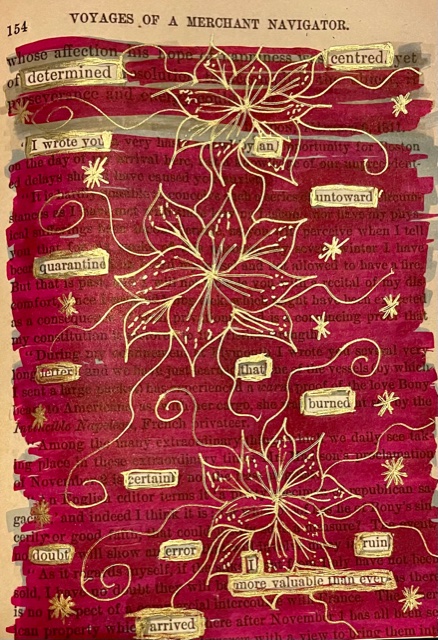
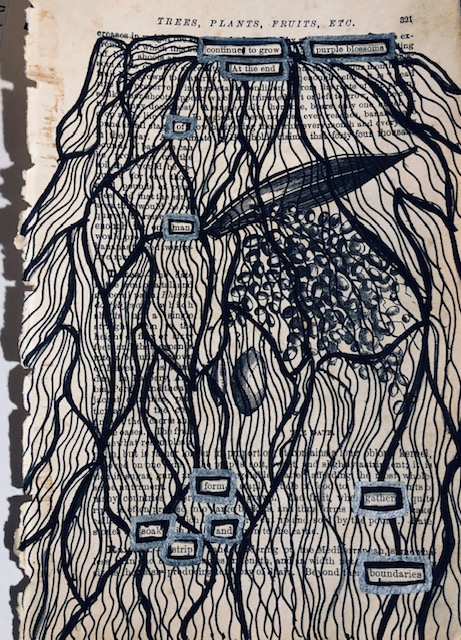
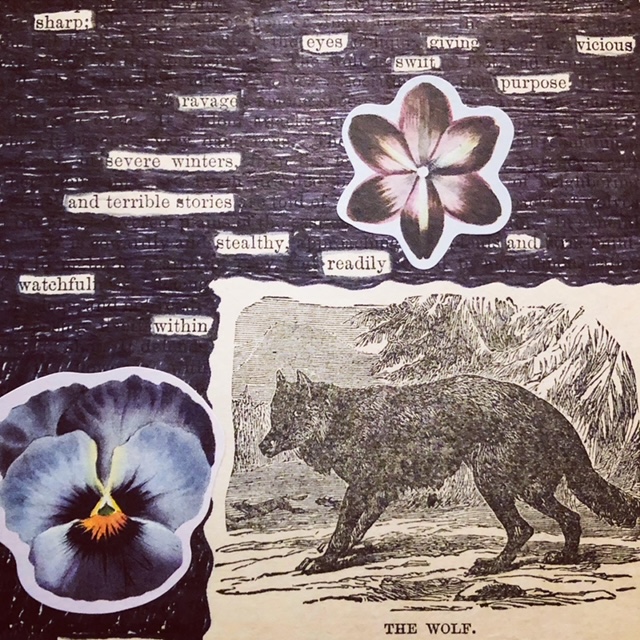
This process is called blackout poetry. I call this the poetry method for anyone who’s convinced they are poetically challenged. You take an old book page, either real or photocopied depending on your stance on dismantling old books, and you circle the best words and phrases that can come together to make a sensical or ambiguous poem. Then you break out a black Sharpie and draw lines through all the words you don’t want seen. This can be done simply with black ink or if you’re feeling bold, you can sketch, paint, or collage the spaces you want blanked out. Here are some of mine. 

Blackout poems can be a versatile, cathartic, and freeing process, but it can also be challenging, especially for children who have enough of a hard time putting their thoughts on paper. But these guys embraced every second of this scribbling madness and knocked it out of the park. I didn’t think I could get a bunch of special education students to use unconventional ways to create poetry, but I still fall into the trap of questioning my kids’ abilities. Every time I do, I’m the one that comes out looking like the dumbass. As a special education student myself, growing up in cesspools filled with  people who doubted my abilities, which then kept my self-image in the shitter, I can understand where my own strained confidence comes from. 

For weeks, I rehearsed my kids to death – pushing as much eye contact with the audience as possible, reminding them to stand straight and tall and face the audience. I repeated the word “enunciate” excessively, and I threw little tantrums like my old drama teacher from high school, Mr. L –  the only teacher who could make me feel like I was ready to stand up in the world and be seen, heard, and remembered. I can’t say I was looking to match that kind of leadership. You either have it or you don’t. As a teacher or parent, you can always make an impact, but there’s a vast difference between educators and teachers. Educators instill knowledge and skill sets. A teacher’s job is to lay the bricks needed for students to value what they’ll experience as well as prepare them for the wrecking balls they have to dodge as they build. And perhaps…just perhaps, we also have to encourage our youth to experience and accept failure and approach it with an open mind. 

The day of the performance was phenomenal. Aside from one student who was overcome with crippling anxiety and had to leave the stage, every kid moved and felt their words and did their damndest to make sure the audience felt those punches. Not many powerful and joyous moments bring me to tears. I can’t say I’ve had enough of them to truly know the difference between my cool tears and my hot ones. But I ended the show, as the host, barely able to verbalize the unbridled pride I felt for my brilliant but underestimated wordsmiths. Based on their words, they know there is good in the world that will embrace their abilities and disregard their disabilities. But they also know as well as I do, this world dissolves what doesn’t fit into a typical mold. This duality is not easy for our kids to remember because all we seem to do is teach our kids how to avoid their external and internal demons. In general, we dwell too much on how to be happy, and we don’t focus enough on how to be productively despondent. 

Our Little Angels and Demons Eating Disco Fries – stories and essays about where we’re going right and wrong —an excerpt

“So let’s say an angel and a demon head out to a diner for disco fries. Let me apologize ahead of time for the numerous New Jersey cliches and stereotypes that will probably make their way into this book. I’ve lived here all of my life – spending my childhood and adolescence in the southern part of the state and my adulthood in the northern part. So I am on the fence when it comes to the Taylor ham vs. pork roll division, another all-in-good-fun Jersey stumper I’ll explain later. But for now, let’s take a glimpse at our angel and demon diner date.

Angel: “You know, you should really make our person take a few moments and think about her choices before she acts. Her life is going to end up in the…place she uses to eliminate waste which she likes to call the…I choose not to repeat it.” Angel shoves a large forkful of gravy, cheese, and fries into her mouth, leaving remnants on her cheek and white button down.

Demon: “Lighten up there, Mrs. Rogers. She’s got to look after herself and do what she’s got to do. Let her be a screw up, builds character. You know, plenty of angels fall. Hell, look at me!” Demon’s face puckers as she bites down on the lemon from her iced tea glass then wipes her hands with the napkin on her lap.

Angel: “You make it sound like that’s a good thing, Mrs. Manson.”

Demon: “It is! Without me she’d never be able to destress, detach, detox, and most importantly she’d never get laid, get paid, and would give way too much of a fuck about everything.” She picks at small, soggy leftover pieces of French fry.

Angel: “Ugh, are you aware of how disgusting you allow yourself to get? If it wasn’t for me, she would be a complete loser with no compassion, no honor, no articulation, no-”

Demon: Matthew 7:1 my friend. Matthew 7:1. Or does that not apply anymore? From the looks of things, that might have died with Lennon.”

Matthew 7:1 refers to, “Judge not that ye be not judged.” It’s difficult for the average person to find validity in this verse. We judge and we are judged on a cellular level. It’s as unavoidable as a bad internet date or a lousy slice of mall pizza. But what if I said that maintaining disciplined judgement doesn’t necessarily make you a bad person? What if every time we passed judgement, which we all do consciously and subconsciously, we turned it into something productive and illuminating? We can’t make a decision about somebody’s character and then pour resin over it. But we can, and should, make that judgement more malleable. This is where intuition comes into play. Yes, our guts can screw us over in a myriad of ways. But as Albert Einstein once said, “The intuitive mind is a sacred gift and the rational mind is a faithful servant. We have created a society that honors the servant and has forgotten the gift.” Some of the world’s most brilliant minds didn’t find their places in the world by being rationale. If I had to pick a quote that would sum up this whole book, Einstein’s would be it.

It is our intuition that saves us from servitude and disillusionment. It is our intuition that saves us from deception as well as physical, mental, and emotional anguish. Unfortunately, our intuitions are often silenced, and we can blame society all we want. The truth is, we have no one to blame but ourselves because all of this is our creation. As Generation X continues to age and younger generations take the helm, we have to seriously reevaluate how we’re teaching our kids to function as somewhat stable, usually productive, and regularly tolerant human beings. It seems like the gavel drops before our kids ever get a chance to screw up. When they do screw up, through little fault of their own, recovery is either too much of a slippery slope or that slope isn’t slathered with enough butter…”